


How to Measure Roller Chain Size
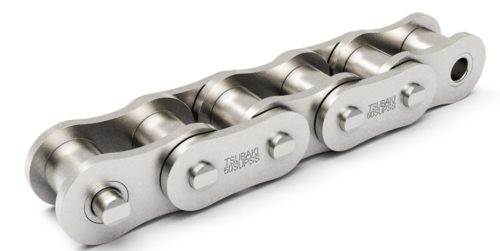 When it comes to maintaining industrial equipment, one of the most overlooked – yet essential – tasks is correctly measuring your roller chain. Whether you’re replacing a worn chain or sourcing parts for a new system, knowing the exact chain dimensions helps avoid unnecessary downtime, ensures equipment runs efficiently, and minimizes compatibility issues. In this guide, we’ll walk you through how to measure chain length and other key roller chain attributes using U.S. Tsubaki’s Complete Guide to Chain as a reference.
Important Dimensions to Measure
Roller chains come in standard sizes, but wear, modification, or lack of documentation can make it hard to identify what you’re working with. The four main chain dimensions to measure are:
- Pitch – the distance between the centers of two consecutive pins. This is the foundation of chain size and should be measured precisely.
- Roller Diameter – the outside diameter of the roller that rides into the sprocket.
- Inside Width (between inner plates) – critical for fitting the chain onto the sprocket teeth.
- Overall Chain Length – either measured in inches or by counting the number of links.

These values help you cross-reference the chain size with ANSI standards or manufacturer charts like the one in U.S. Tsubaki’s Complete Guide to Chain.
Tools and Preparation
Before you begin, gather the right tools:
- A caliper (digital or dial) for accurate pitch, roller diameter, and inside width measurements
- A measuring tape or ruler for longer spans and total length
- A chain wear gauge (optional but helpful)
- A clean, flat surface to lay out the chain
- A cloth to clean dirt and oil from the chain
Lay the chain flat and pull it taut to remove slack for accurate readings.
Step-by-Step Measurement Procedure
Follow these steps to measure your roller chain accurately:
1. Measure Pitch
Lay the chain flat and measure from the center of one pin to the center of the next. For best accuracy, measure across 4–6 links and divide by the number of pitches (spaces between pins). For example, a 3-inch span across 3 links equals a 1-inch pitch.
2. Measure Roller Diameter
Use your caliper to measure the outer diameter of a roller. This measurement ensures the chain matches the sprocket’s contours and spacing.
3. Measure Inside Width
Measure the space between the two inner plates. This is important for fitting the chain onto the sprocket and should align with ANSI or manufacturer specs.
4. Measure Overall Chain Length or Number of Links
If the chain is intact, measure the total length in inches. Alternatively, count the number of links. You can then calculate total length by multiplying the number of pitches by the pitch size.
5. Reference the U.S. Tsubaki Size Chart
Once you’ve collected your measurements, refer to Tsubaki’s PDF guide. Use the charts to match your pitch, roller diameter, and width to an ANSI roller chain size such as 40, 50, 60, etc.
Checking for Wear / Wear Elongation
Over time, chains elongate due to wear between pins and bushings – even though the metal hasn’t stretched. This “wear elongation” can affect performance and lead to sprocket damage.
To check:
- Lay the chain flat and measure the pitch across a series of links
- Compare to the original length using this formula:
Elongation % = [(measured length – nominal length) / nominal length] x 100
If the chain has elongated by more than 1.5–2%, it should be replaced. U.S. Tsubaki also offers chain wear indicator kits for fast, reliable checks.
Using the U.S. Tsubaki Complete Guide
The Complete Guide to Chain from U.S. Tsubaki includes detailed tables listing ANSI sizes, pitch, roller diameter, inner width, and more. Once you’ve measured your chain, simply compare your numbers to the tables to identify the proper chain size.
Look for:
- ANSI/ASME Number
- Nominal pitch and roller dimensions
- Standard tolerances
This ensures you’re selecting the right chain for replacement or reordering.
Conclusion & Next Steps
Accurately measuring your roller chain is a small task with big consequences. Whether you’re maintaining a production line or outfitting new equipment, getting the chain dimensions right will save time, reduce costs, and prevent failures.
Download U.S. Tsubaki’s Complete Guide to Chain for full dimensional tables, selection tips, and expert insights. For replacement chains, measurement tools, or technical support, visit U.S. Tsubaki’s Roller Chain Products or Contact Us.
Comments are closed