


Coupling Selection Guide: How To Choose the Right Coupling for Your Application
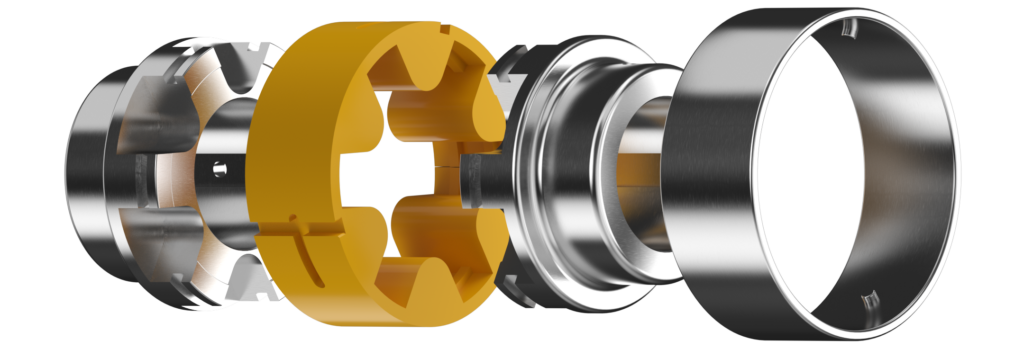
Couplings are the mechanical links that transmit torque and motion between two shafts, keeping power flowing from the driver to the driven equipment. Whether you’re connecting an electric motor to a gearbox or a pump to a turbine, the coupling ensures smooth and continuous operation across mechanical systems.
Performance depends heavily on choosing the right type for the job. However, coupling selection isn’t as simple as matching shaft sizes. The wrong choice can lead to premature wear, system imbalance, or even catastrophic failure. That’s why engineers and maintenance professionals turn to trusted couplings like Atra-Flex®, which has long served industrial users with reliable and durable solutions.
So, how do you know if your chosen coupling is the right fit? Which design factors and operating conditions truly matter? And what pitfalls should you avoid? This comprehensive coupling selection guide walks through these critical questions.
Why Coupling Selection Matters
Couplings directly affect system reliability. When the chosen coupling doesn’t align with the application, mechanical problems tend to surface quickly. Failures may include early bearing wear, seal degradation, or repeated maintenance interventions, all of which interrupt operations and increase long-term cost.
In contrast, selecting the right coupling contributes directly to equipment longevity and stable system performance. It helps manage misalignment, limits vibration, and reduces load on shafts and bearings, which supports maintenance goals by minimizing component wear and reducing the risk of unplanned downtime.
When the coupling is properly matched to load conditions and the surrounding environment, it becomes a reliable part of the system instead of a recurring point of failure or requiring intensive maintenance.
How To Select a Coupling: Key Factors To Consider
Each application brings its own demands, so the coupling selection process should account for those operating conditions from the start.
Here are some factors to consider when working with how to select a coupling for your application:
Torque and Service Factor Requirements
Start by calculating the coupling’s required torque. Then, apply a service factor to account for real-world conditions like shock loads, start-stop cycles, or load reversals. For example, a centrifugal pump might require a lower service factor than a crusher would. It’s important to consult each coupling manufacturer for their service factor recommendation.
Be careful not to oversize. An overly robust coupling may not protect the system during overload events and can introduce unnecessary mass or stiffness. It is critical to select a coupling based on the actual application torque and not solely based on the existing coupling rating. This will potentially lead to an oversized coupling.
Operating Speed and Load Characteristics
Speed and load conditions influence which coupling designs will perform reliably. At high RPMs, balance and torsional stiffness are essential to minimize vibration.
For systems with reversing or varying torque, choose a coupling with the fatigue strength to handle cyclical stresses without premature wear or failure.
Misalignment Tolerance
All rotating equipment experiences some degree of angular, parallel, or axial misalignment. This can result from thermal growth, mounting inaccuracies, or frame distortion.
When selecting a coupling, confirm that it can tolerate the expected misalignment without overstressing connected equipment. Flexible couplings like Atra-Flex® help absorb misalignment and reduce load on bearings, improving equipment longevity.
Environmental and Operating Conditions
The surrounding environment also plays a significant role in coupling selection. Exposure to heat, chemicals, moisture, or abrasive debris can degrade elastomeric elements or corrode metal parts.
Materials should be selected based on known hazards. In harsh settings, Atra-Flex® couplings with OnyxShield™ provide added corrosion resistance and material protection.
Maintenance and Serviceability
Consider how easy the coupling will be to install, inspect, and replace. Some designs require complete disassembly to access internal components, which can extend downtime and increase labor.
In applications where uptime is a priority, choose couplings that allow faster inspections and easier part replacement. Atra-Flex® couplings incorporate a “replace in place” insert design without moving hubs or connected equipment, meaning less downtime. In addition, Atra-Flex® couplings have no metal-to-metal contact, meaning inserts are the only wearing components compared to other coupling types that must be completely replaced overtime.
Space Constraints and Shaft Sizes
Finally, ensure the coupling physically fits the available space. Check outside diameter, distance between shaft ends separation (DBSE), and bore capacity. Oversized shafts may require a larger or HD style hub, and longer shaft spacing may require a spacer-type or possibly a floating shaft coupling.
Always verify dimensional compatibility before finalizing your choice.
Comparing Common Coupling Types
Mechanical systems use various coupling types, each designed to solve different challenges in torque transmission and system dynamics.
Common styles include:
- Rigid couplings, which allow zero misalignment
- Gear couplings, known for high torque capacity and require lubrication
- Grid couplings, which absorb shock loads and require lubrication
- Disc couplings, zero backlash preferred for high speed applications
- Elastomeric couplings, which provide damping and do not require lubrication
Flexible couplings bridge many of these capabilities by handling misalignment while reducing wear on connected equipment. They’re especially useful in industrial applications where perfect alignment is not practical due to foundation movement, thermal growth, or assembly tolerances.
Flexible designs like Atra-Flex® are engineered to balance misalignment tolerance and reduce downtime, which are key considerations for long-term reliability. If this sounds like what you need, use the Atra-Flex® Coupling Selector Tool to narrow down options based on your application needs.
Step-by-Step Coupling Selection Guide
Use the steps below to guide your decision-making and ensure the coupling you choose fits your system in real-world operation.
-
Define Application Torque and Speed
Use the application horsepower and RPM to calculate torque. When selecting a coupling solely based on the rating of an existing coupling, this will lead to a larger coupling and a rating significantly higher than the system requires.
This ensures the coupling will be the fuse, connecting the driver and driven equipment, and matches how the system will actually perform.
-
Determine The Service Factor
The service factor is critical because different driver and driven equipment have different operating characteristics. An incorrect service factor could lead to an undersized coupling that will fail prematurely. Reference the manufacturer’s recommendation for application specific service factors.
-
Determine Required Flexibility and Space
Use field measurements to confirm how much movement the coupling must handle and the installation space available. If you’re designing for pump maintenance access, consider spacer couplings or drop-out elements that simplify service without increasing maintenance time. If axial travel is required, Atra-Flex® can accommodate without adding additional components.
-
Identify Expected Misalignment
Beyond specifying allowable angular or parallel deviation, consider when and where misalignment occurs. This helps you prioritize couplings that can tolerate dynamic misalignment without degrading performance over time. Compare this misalignment with the manufacturer’s coupling ratings because each manufacturer has different misalignment ratings. Also, it’s important to consider the connected equipment’s misalignment ratings as well, as some couplings may be able to handle more misalignment than other components of the drive train.
-
Consider Environment and Temperature
Don’t just review environmental risks; clarify how they affect the coupling’s lifespan or maintenance cycle. For example, determine whether exposure to washdowns or caustic fluids will require material upgrades. Long term exposure to containments or moisture should be considered.
For continuous exposure or long service intervals, corrosion-resistant options such as OnyxShield™ offer added durability.
-
Validate Using the Atra-Flex® Coupling Selector Tool
Input all key parameters into the Atra-Flex® Coupling Selector Tool. This ensures the selected model meets both functional and physical requirements before you commit to procurement.
Common Mistakes in Coupling Selection (and How To Avoid Them)
Many coupling failures can be traced back to issues that could have been avoided during selection. These oversights often result from assumptions made early in the process or a lack of application-specific detail.
- Underestimating Torque Requirements: Startup, braking, and transient loads often exceed steady-state values. Failing to account for these conditions can result in premature coupling failure, even when nominal torque ratings appear adequate.
- Incorrect Service Factor: The service factor is critical in selecting an appropriately sized coupling. The service factor will generally lead to a conservative selection. An incorrect service factor could lead to an undersized coupling, increasing the risk of failure and downtime.
- Ignoring Alignment or Environmental Factors: An appropriately sized coupling may still perform poorly if exposed to excessive misalignment, heat, moisture, or corrosive fluids. Misjudging these variables puts stress on the coupling and nearby components.
- Overlooking Maintenance Intervals: Some coupling designs are difficult to access or service, which leads to neglected maintenance. This increases the risk of failure and extends downtime during repairs. Atra-Flex® is the go to for minimal maintenance coupling designs.
Use the Atra-Flex® Coupling Selector Tool
The Atra-Flex® Coupling Selector Tool simplifies selection by turning application data into reliable recommendations.
Just enter your operating torque, RPM, and shaft sizes.The tool filters suitable models across the Atra-Flex® product range, helping you identify options that meet performance and dimensional requirements.
This resource is designed for engineers, maintenance personnel, and anyone responsible for system reliability. Whether you’re specifying for a new project or replacing an existing coupling, the tool helps reduce guesswork and improve confidence in selecting the right coupling. Try it today to streamline your next specification.
FAQs About Coupling Selection
How do I know which coupling type is right for my system?
Start by evaluating torque, misalignment, environmental exposure, and space constraints. Then, compare coupling types based on torque capacity, maintenance needs, and operating speed. Tools like the Atra-Flex® Selector help narrow down your options.
What factors most affect coupling performance?
The biggest factors are torque load, misalignment, and environmental conditions like heat or moisture. Maintenance also matters. If a coupling isn’t checked or serviced per the manufacturer’s recommendation, its performance can drop off quickly.
Can flexible couplings handle high torque?
Yes, flexible couplings can handle high torque when they’re sized correctly. Atra-Flex® couplings can handle over 3.6 million in-lbs of torque and 20-inch shaft sizes while accommodating misalignment.
How often should couplings be inspected or replaced?
That depends on your operating conditions, coupling installation and maintenance manual, and maintenance team’s best practices. In most cases, couplings should be inspected during routine maintenance. If you’re using an elastomeric insert, check it visually for wear.
Find the Right Atra-Flex® Coupling for Your Application
Atra-Flex® couplings are engineered to meet the demands of real-world applications. They’re built to handle high torque, compensate for misalignment, and operate reliably in tough environments. If your priority is long service life with minimal maintenance, Atra-Flex® offers designs that support exactly that.
The T-Series and M-Series are each developed to solve specific challenges, whether you need compact strength or consistent performance under variable conditions. Options like OnyxShield™ and replaceable split inserts make maintenance simpler and more predictable.
Built on decades of field-proven performance, Atra-Flex® gives you confidence in both day-one fit and long-term reliability. Explore the full Atra-Flex® product lineup, or contact us to find the coupling that fits your system down to the last detail.
Comments are closed