


Why Crossbar Design Matters in Cable Carriers
When engineers evaluate a cable carrier, they often compare travel length, bend radius, and cable capacity. But one of the biggest contributors to long-term system reliability is frequently overlooked: The crossbar system. Every time a cable carrier cycles, the cables and hoses move slightly inside the carrier. Over millions of cycles, that movement creates friction between the cable jacket and the crossbars. The amount of wear depends largely on how the cables are supported—specifically, the material, geometry, and contact surface of the crossbar.
To better understand this relationship, KabelSchlepp conducted long-term abrasion testing using multiple crossbar designs and several common cable jacket materials.
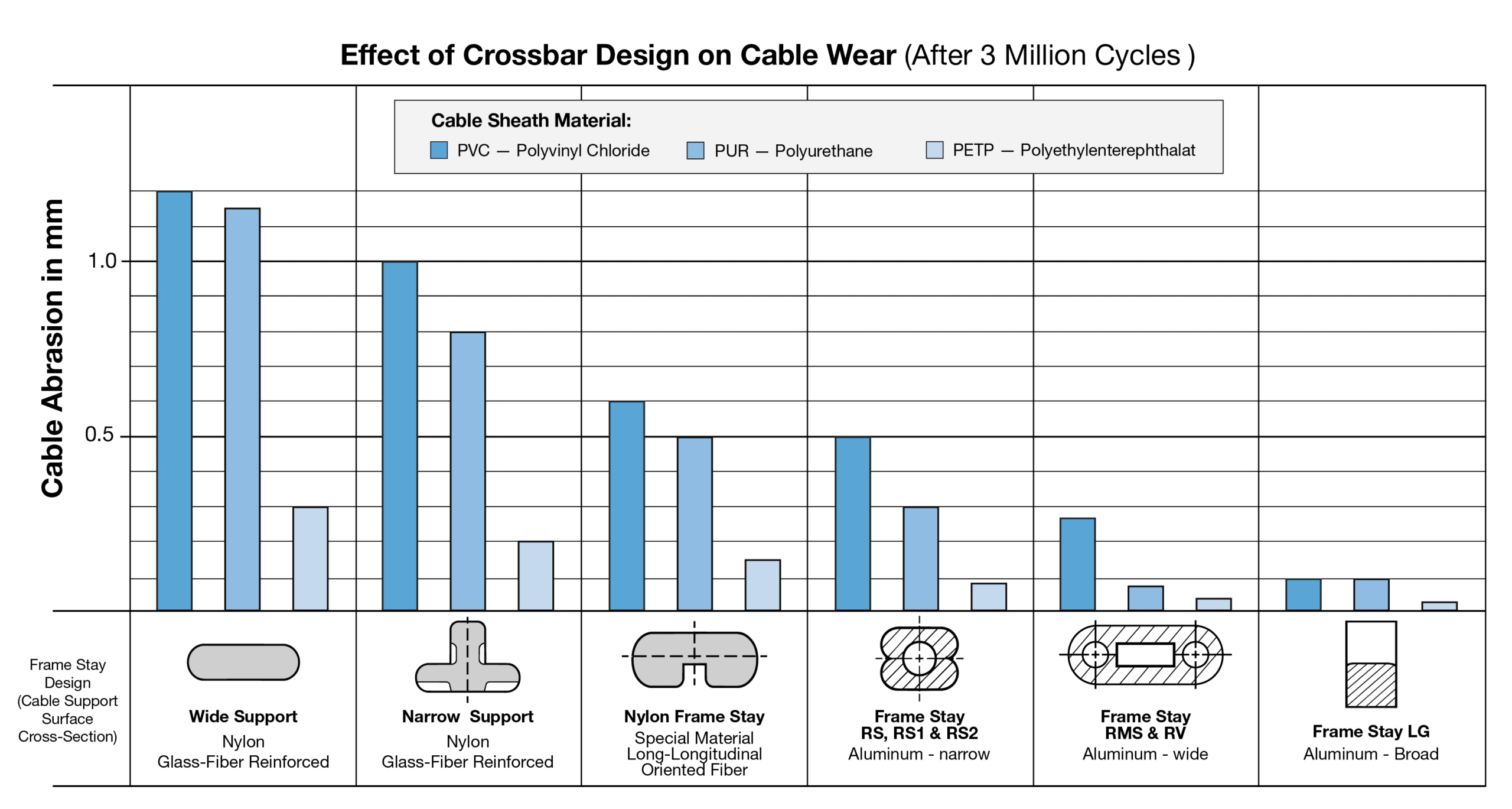
The results clearly demonstrate that crossbar design has a measurable impact on cable abrasion and long-term cable life. Smooth aluminum crossbars consistently produced the lowest abrasion, while different support geometries and materials created varying levels of cable jacket wear. The testing reinforces an important engineering principle; Crossbars don’t just hold cables—they help determine how long those cables last.
Engineering the Support Surface
A cable is constantly flexing and moving throughout the carrier’s operating life. Poor support can concentrate pressure on small contact areas, increase friction, and accelerate jacket wear. A properly engineered support surface distributes loads more evenly and allows cables to move naturally with minimal abrasion.
That’s why KabelSchlepp engineers its crossbars around cable protection first, while also considering accessibility, structural strength, and environmental requirements.
Why Material Makes a Difference
One of KabelSchlepp’s greatest advantages is offering both aluminum and polymer crossbar systems in several different designs and layouts. Each material provides unique benefits depending on the application.
ALUMINUMAluminum is widely used throughout KabelSchlepp crossbars, brackets, and accessories because of its outstanding combination of mechanical performance and cable-friendly characteristics. Benefits include:
|
POLYMERFiber-reinforced nylon crossbars provide another excellent solution where lightweight construction, corrosion resistance, or application-specific design flexibility are priorities. Benefits include:
|
Geometry Matters Just as Much
Material is only part of the equation. The shape of the crossbar determines how cables are supported throughout their travel. Some designs provide broad support surfaces that distribute loads across the cable jacket. Others precisely position cables along the neutral axis, minimizing relative movement inside the carrier. Enclosed designs protect cables from chips, debris, and contamination, while open configurations provide faster installation and maintenance access.
A Crossbar for Every Application
Because no two applications have identical requirements, the KabelSchlepp product line offers one of the industry’s most comprehensive selections of crossbar systems. Rather than forcing customers into a single design, each configuration solves a different engineering challenge.
MONOAn economical molded crossbar available in fixed-width configurations for standard applications. |
RS/RS2Smooth extruded aluminum crossbars offering custom widths, lightweight construction, and excellent cable friendliness. |
RVReinforced twist-in aluminum crossbars designed for fast access while maintaining exceptional structural strength. |
RMSHeavy-duty aluminum crossbars with wide support surfaces for extra-wide carriers and large cable packages requiring maximum rigidity. |
RMRPremium aluminum crossbars incorporating integrated rolling supports and divider systems to provide exceptional cable protection and reduced wear. |
RMD/RDDEnclosed crossbar systems that protect cables from dirt, chips, and debris. Available in aluminum or fiber-reinforced polymer depending on the application. |
RMADesigned specifically for oversized hoses and large media lines requiring extended support. |
LGAn open-hole crossbar that accurately positions cables on their neutral axis, reducing relative movement and helping maximize cable life. |
REFiber-reinforced polymer crossbars providing lightweight performance with modular width flexibility. |
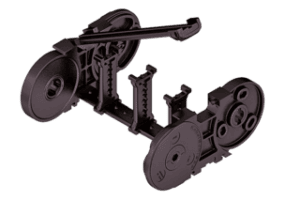
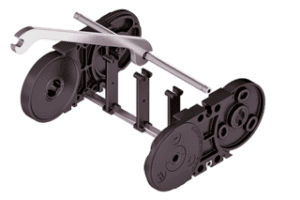
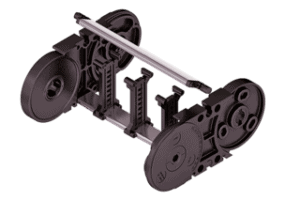
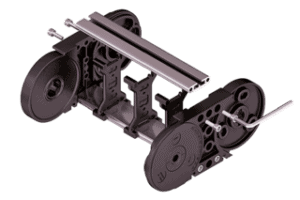
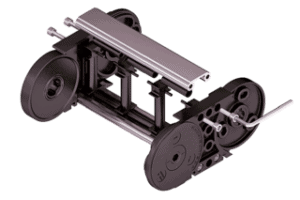
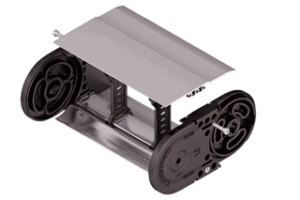
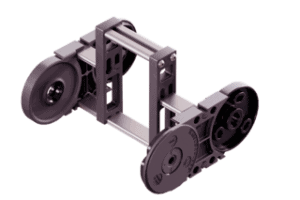
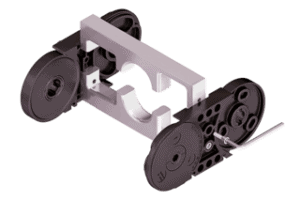
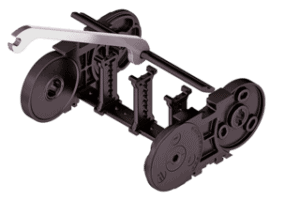
Many of these crossbar options are available on the KabelSchlepp M Series, one of our most versatile carrier platforms. Designed for a wide range of industrial applications, the M Series combines modular construction with multiple crossbar styles, allowing engineers to configure a solution that balances cable protection, accessibility, structural strength, and ease of installation.
Protecting Cables Starts with Better Crossbar Design
Cable carriers do far more than guide cables from one point to another. They protect some of the most valuable components in a machine.
By engineering crossbars with application-specific materials, support geometries, and cable-friendly surfaces, KabelSchlepp helps customers reduce cable wear, improve system reliability, and maximize service life.
Whether your application requires lightweight polymer crossbars, precision aluminum support systems, enclosed protection from debris, or a fully customized solution, our engineering team can help select the configuration best suited to your equipment.
Ready to optimize your cable carrier system? Talk to an Engineer or browse our full cable carrier lineup to find the right crossbar design for your application.
Comments are closed