


Chain “Stretch” Explained: What Actually Causes Chain Elongation?
Most maintenance professionals have heard someone say, “The chain stretched.”
While the chain may appear longer after some time in service, the steel sidebars haven’t actually stretched under normal operating conditions, but instead what you’re seeing is normal wear between the pin and barrel, which gradually increases the pitch of the chain. Understanding this difference is critical because it affects maintenance schedules, sprocket life, conveyor performance, and replacement timing.
What Causes Chain Elongation?
Every time a joint in the chain engages and disengages a sprocket, the pin rotates against the ID of the barrel. This rotation wears off microscopic particles from the pin and barrel surfaces, which over time increases the effective pitch length of over each link of chain. The wear occurs at every joint in the chain and over time the accumulated wear becomes noticeable and measurable.
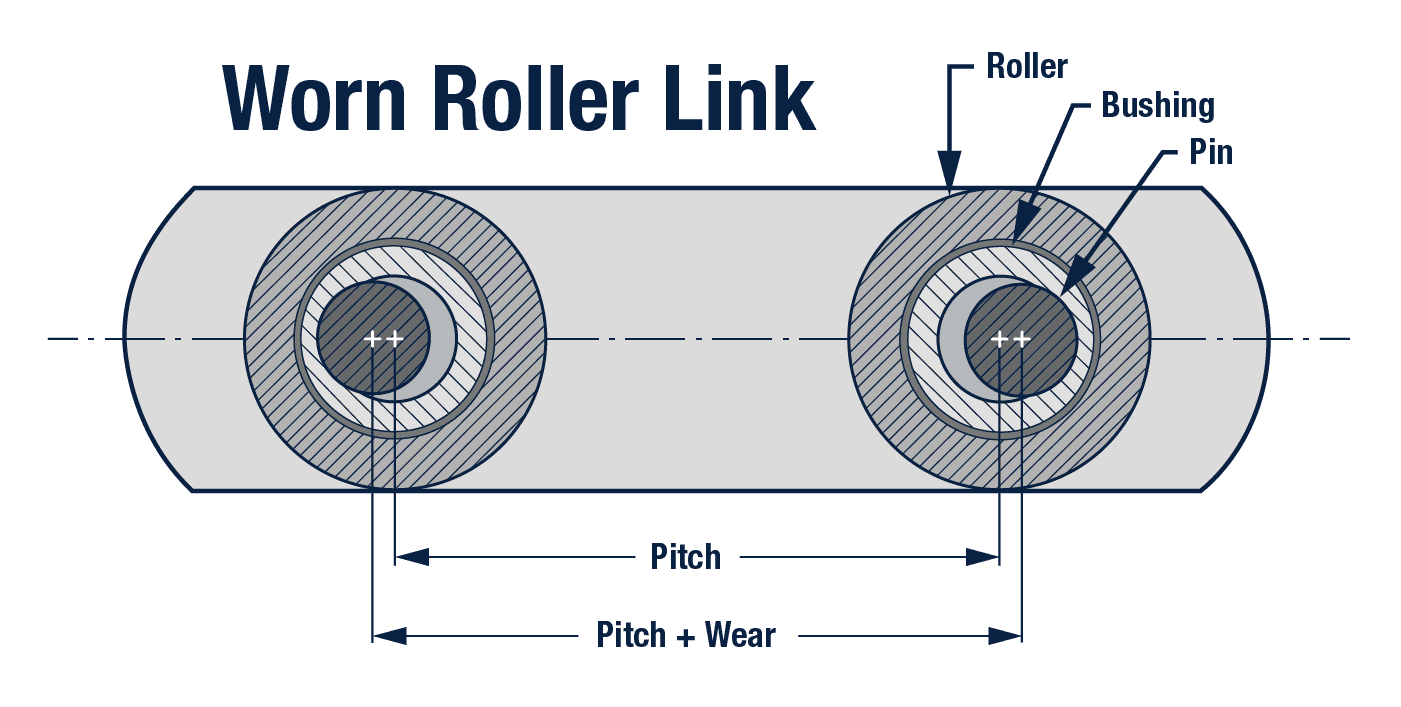
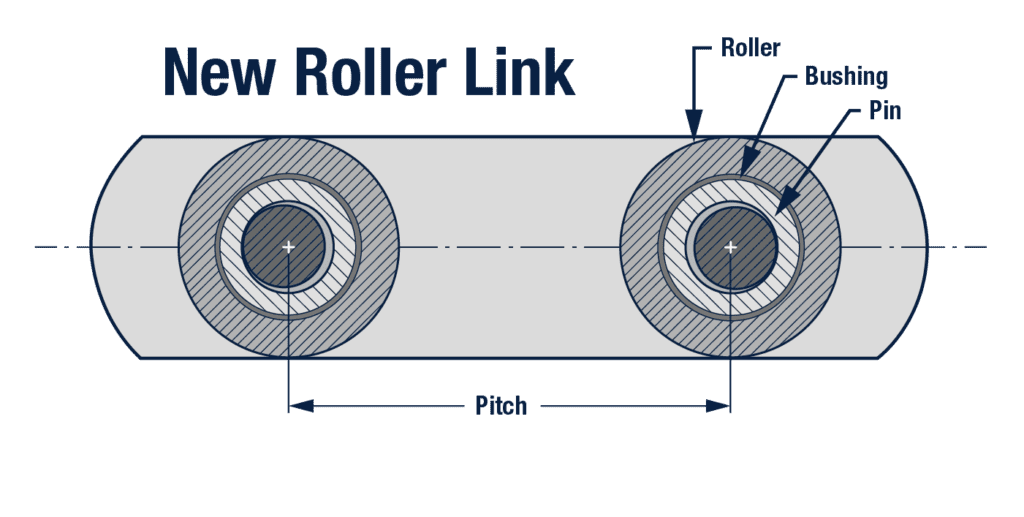
The Three Phases of Chain Wear
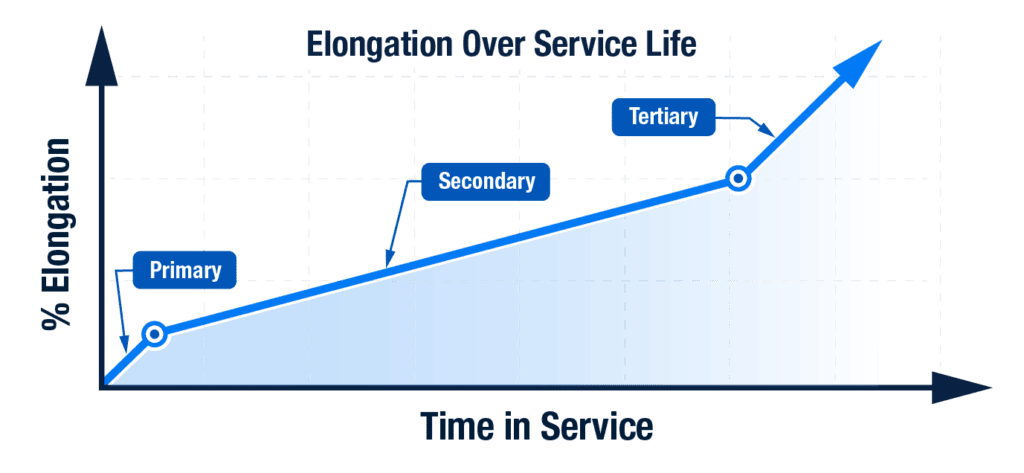
Chain wear generally develops through three distinct phases: Primary or early run-in (break-in), Secondary or operating wear, and Tertiary or end of life wear.
1. Primary Wear: Run-In or Break-In
Primary wear occurs during the first several hours of operation, where the pins and barrels polish any roughness from the manufacturing operations. Wear may occur relatively quickly during this initial run-in period before settling into a more consistent rate.
2. Secondary Wear: Normal Operating Wear
Secondary wear is the longest phase, where the chain operates normally and wear is occurring at a consistent rate. This is the phase in which regular inspection, lubrication, alignment, and elongation measurements can provide valuable information about remaining chain life.
3. Tertiary Wear: End-of-Life Wear
Tertiary wear occurs when the hardened layers of the pins and barrels have worn through, and the softer cores wear at a faster rate. Rapidly increasing elongation during this phase is an indication that the chain is approaching the end of its useful service life.
As a result of the elongation the maintenance teams may begin to notice several changes in conveyor operation:
- Increased slack on the return side of the chain
- Poor engagement between the chain and sprocket
- Uneven load sharing across the sprocket teeth, more tooth wear
- Chain may snag on return rails or other obstructions
- Increased amount of noise from the chain
Why Chain Elongation Can Be Difficult to See
Even significant elongation may not always be obvious to the naked eye. The total dimensional change depends on both the chain pitch and the number of pitches in the strand.
For example, consider 3% elongation in two very different chains.
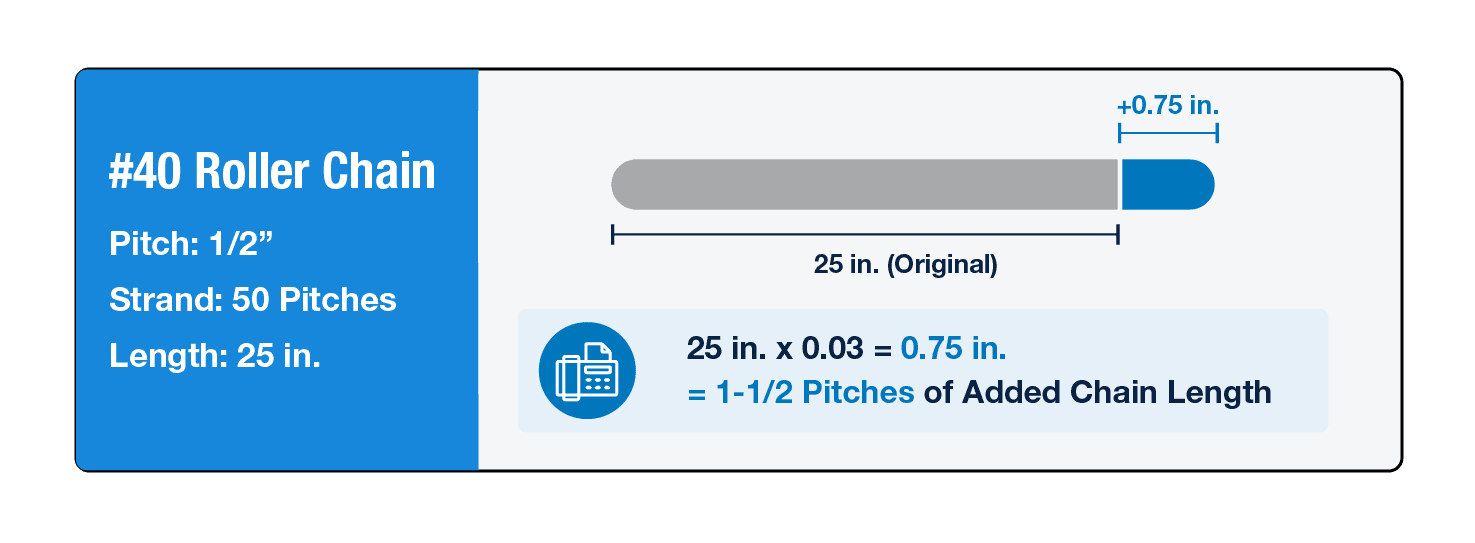
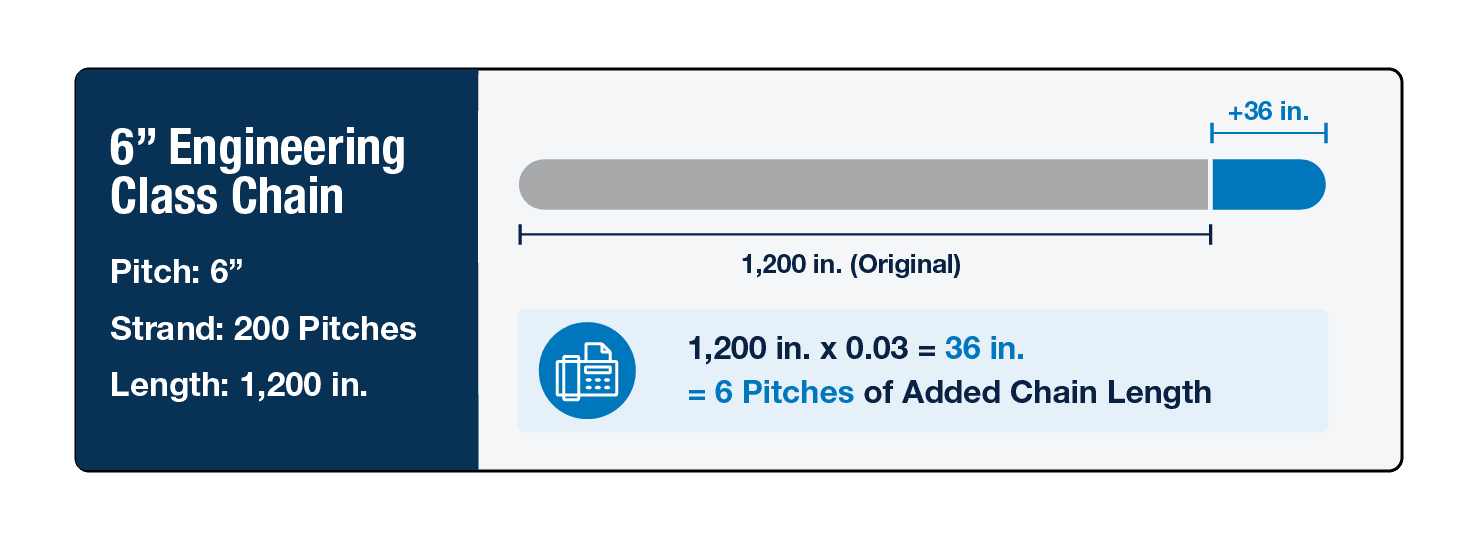
Both chains have experienced the same percentage of wear elongation, but the total dimensional change is dramatically different.
What Causes Chain to Wear Faster?
Excessive Load
Operating above the chain’s working load or maximum allowable load increases bearing pressure between the pin and barrel, which can accelerate wear.
Dust and Abrasive Contaminants
Dusty or dirty environments can introduce abrasive materials into the chain joints. Common contaminants include sand, metal dust, wood fibers, and mineral dust. Struggling with harsh environments? Check out the Titan® Series.
Higher Operating Speeds
Higher chain speeds increase the frequency with which each joint articulates around the sprockets. More articulations over time can result in faster wear; this applies to short chain lengths especially.
Misalignment
Misalignment between the chain and sprockets can create uneven loading and uneven wear across the chain components.
Inadequate Lubrication
Proper lubrication helps reduce friction and wear between the pin and barrel. Insufficient lubrication can significantly accelerate wear. Is your chain in a hard-to-access area? Check out the lube-free chain: Lambda®.
How to Measure Chain Elongation
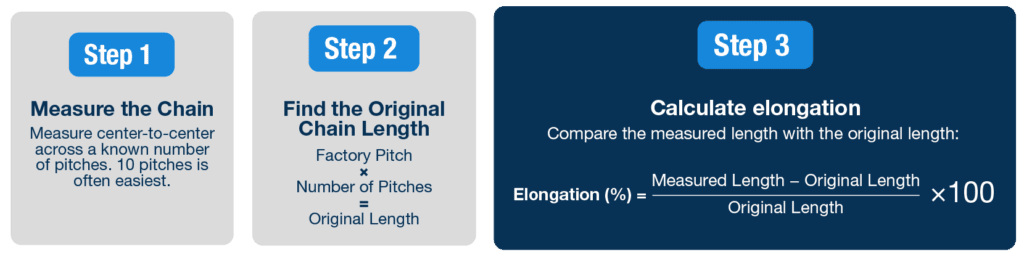
Chain elongation is expressed as a percentage of the chain’s original length. Because the wear is uniform at each chain joint, the elongation can be measured at any location on the chain, usually without removing the chain from the conveyor. For accurate results, the chain should be pulled straight and placed under enough tension to remove slack before measuring.
When Should a Chain Be Replaced?
U.S. Tsubaki generally suggests replacing a chain at 3% wear elongation, subject to the customer’s actual application and operating experience. Regular measurement can help maintenance teams track wear and plan replacement before it affects sprocket life or conveyor performance.
If you have questions about chain wear or replacement, contact U.S. Tsubaki for help evaluating your application.
Comments are closed