


Why Hardened Sprocket Teeth Extend Sprocket Life
Longer Chain Drive Life Starts at the Teeth
In a roller chain drive, the sprocket does more than transfer power. Every time the chain engages and disengages, the sprocket teeth experience repeated contact and loading. Over thousands or millions of cycles, that interaction gradually wears away material and reduces the life of the sprocket.
The material and manufacturing quality of a sprocket matter, but so does the condition of its teeth. Hardening the tooth wear surfaces improves wear resistance and helps the sprocket maintain the proper geometry required for consistent chain engagement.
Where Sprocket Wear Happens
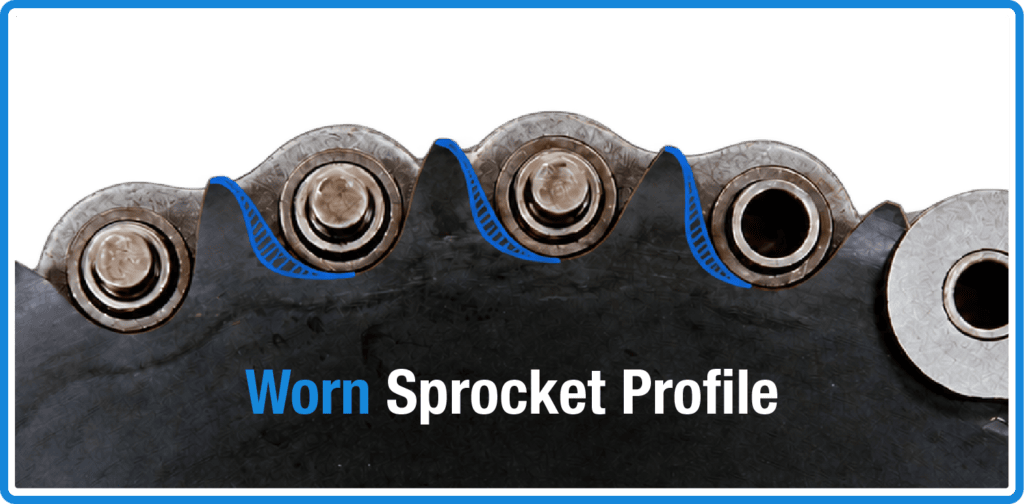 As a roller chain engages a sprocket, the rollers contact the tooth profile and transfer load into the sprocket. This happens continuously while the drive operates, causing wear on the tooth surfaces.
Over time, this repeated contact wears away the steel and changes the original tooth profile. As the teeth wear down, the chain no longer seats smoothly against the sprocket, resulting in less effective engagement.
Once significant sprocket wear develops, replacing only the chain does not solve the problem. A new chain running on worn sprockets will experience poor engagement and accelerated wear, shortening the life of the replacement chain.
That is why sprocket wear should be considered as part of the entire chain drive, not simply as an isolated component issue.
What Does Hardening a Sprocket Tooth Actually Do?
Hardening increases surface hardness in the areas most exposed to wear.
For Tsubaki sprockets, processes such as induction hardening or flame hardening can be used depending on sprocket size and chain pitch. The goal is not to make the entire sprocket as hard as possible. Instead, the tooth wear surfaces are hardened while the core remains more ductile, allowing it to better absorb shock loads.
This creates an effective balance between wear resistance and toughness. The hardened tooth surface helps resist material loss from repeated chain contact, while the ductile core helps the tooth withstand the loads and impacts experienced during operation.
How Hardened Teeth Extend Sprocket Life
1. Increased Resistance to Wear
The most direct benefit of hardened teeth is greater wear resistance. Each time a chain roller engages a sprocket tooth, the two surfaces make contact under load. In demanding applications, particularly those involving heavy loads, high speeds, or abrasive contaminants, that repeated contact will accelerate wear.
Increasing tooth-surface hardness helps resist material loss, allowing the sprocket to maintain its intended profile longer. This makes hardened-tooth sprockets particularly well suited for applications with heavy loads, higher speeds, abrasive environments, and other demanding operating conditions.
2. Better Tooth Profile Retention
Sprocket geometry matters because the chain and sprocket are designed to work together. As sprocket teeth wear, their profile gradually changes. Over time, this affects how the chain rollers engage with the teeth.
Because hardened surfaces resist wear, the sprocket can maintain its original tooth profile for a longer period. This helps maintain consistent engagement between the chain and sprocket throughout more of the sprocket’s operating life.
3. Protection for the Mating Chain
Sprocket life and chain life are closely connected. Installing a new chain on severely worn sprockets exposes the chain to an already compromised tooth profile. Instead of engaging with the geometry it was designed for, the new chain must interact with worn teeth, which will accelerate wear and shorten chain life.
By slowing sprocket wear and helping preserve the tooth profile, hardened teeth will also help protect the mating chain. This is important when evaluating maintenance costs. The goal is not simply to maximize the life of one component. It is to improve the useful life of the entire chain drive.
4. Improved Performance in Demanding Applications
Some operating environments place considerably more stress on sprocket teeth than others. Heavy loads increase the forces transmitted through the chain and sprocket. Abrasive material can accelerate surface wear, while high-speed operation increases the number of engagement cycles over a given period.
Hardened teeth provide additional wear resistance under these demanding conditions. However, hardening does not make a sprocket immune to wear. Extremely abrasive applications, such as some bucket elevator systems, will still cause accelerated sprocket wear. Hardening should be viewed as one part of an effective approach to managing wear, not as a substitute for proper sprocket selection, lubrication, alignment, inspection, and overall drive maintenance.
Why Surface Hardness Isn’t the Whole Story
It might seem logical that the hardest possible sprocket would automatically provide the longest life. In practice, sprocket design requires a balance between hardness and toughness. The tooth surface needs to resist repeated wear, while the tooth itself must withstand the mechanical and shock loads generated during operation.
Hardening helps achieve this balance by increasing wear resistance at the tooth surfaces while allowing the core to remain more ductile. The hardened surface helps resist wear, while the core helps absorb shock and withstand impact during operation. This is why heat treatment should be considered as a way to optimize sprocket performance for the application.
The Value of Hardened Teeth as Standard
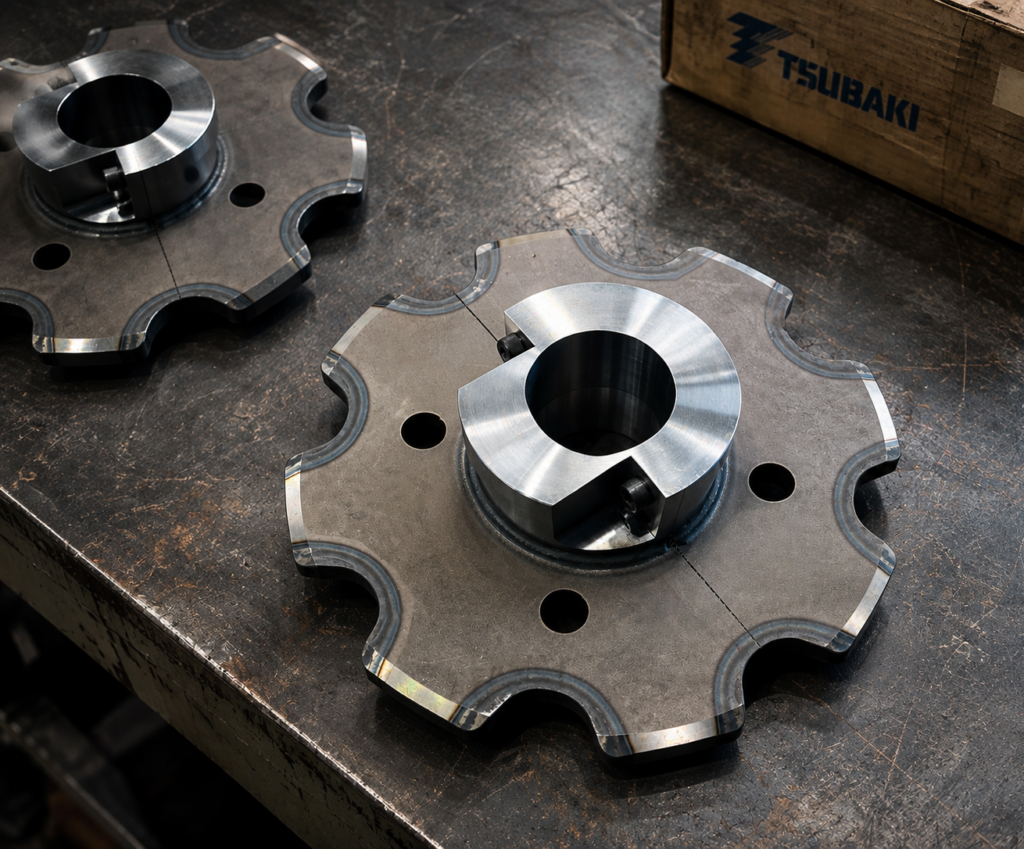 Tsubaki stock sprockets are manufactured from 1045 carbon steel rather than powdered metal and feature hardened teeth as standard to help minimize wear and provide long service life.
The benefits can extend beyond the sprocket itself:
- Longer sprocket service life
- Better protection for the mating chain
- Greater resistance to demanding operating conditions
- Fewer component replacements
- Reduced maintenance-related downtime
- More consistent chain and sprocket engagement over time
Across multiple chain drives in a facility, longer component life will help reduce maintenance requirements, replacement frequency, and overall operating costs.
Look at the Chain Drive as a System
Even a high-quality chain will be affected by a worn sprocket, just as sprocket performance will suffer from poor lubrication, misalignment, or an incorrectly selected chain.
Reliable chain drive performance comes from treating the chain and sprockets as a system. That means selecting the right components, maintaining proper alignment and lubrication, monitoring wear, and matching drive components to the operating conditions.
Hardened teeth are one important part of that equation. By improving wear resistance at the tooth contact surfaces, they help preserve the sprocket tooth profile, reduce wear on the mating chain, and extend the overall service life of the chain drive.
Comments are closed